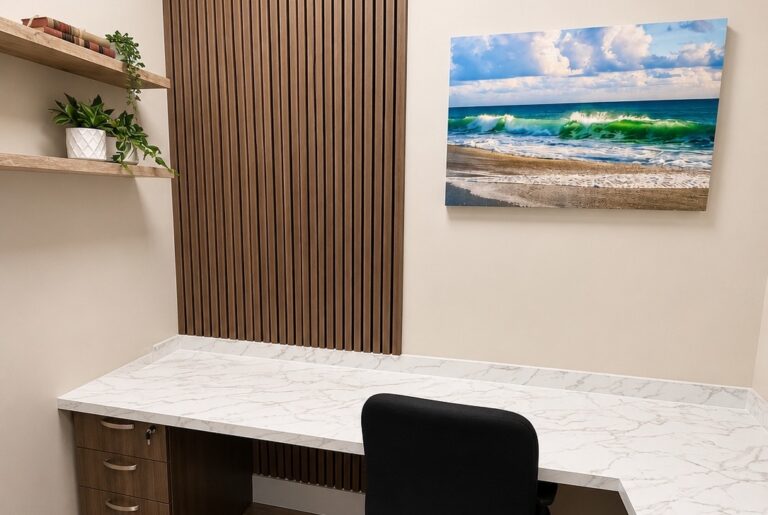
A psychiatry office is more than a place to meet with patients.
It is a clinical environment where trust is built, sensitive information is shared, and therapeutic relationships develop over time. So the physical space must support that process.
Unlike many other professional offices, psychiatric settings require intentional planning around privacy, safety, and emotional comfort. The goal is not simply aesthetics, it is creating a space that feels stable, calm, and secure for both patient and provider.
When thoughtfully designed, the office environment reinforces professionalism while supporting therapeutic outcomes.
Prioritize Confidentiality from the Start
Confidentiality is foundational in any psychiatric practice. Patients must feel confident that conversations remain private and always protected.
Office layout plays a critical role in maintaining that trust. Sound transmission between rooms, visibility from hallways, and reception proximity all influence patient comfort.
Key considerations include:
- Private, sound-insulated offices that prevent conversations from being overheard
- Secure storage for patient records and electronic devices
- Controlled access to treatment rooms
The physical environment sends a powerful signal about professionalism and discretion. Clients often form judgments about credibility based on their surroundings, but in psychiatric care, that perception carries even greater weight.
Design for Clinical Safety
Psychiatry offices must also account for safety in ways that many other professional spaces do not. This does not mean creating a cold or institutional atmosphere, rather, it involves subtle, strategic design choices that protect both practitioner and patient.
Clinical safety considerations may include:
- Furniture placement that allows clear pathways to exits
- Avoiding heavy décor that could be weaponized
- Using secure but discreet storage solutions
- Maintaining clear visibility of the room layout
These measures should feel integrated, not obvious. Patients should experience a calm and welcoming environment, while the clinician maintains appropriate professional safeguards.
Create a Calm and Regulated Environment
While safety is critical, comfort remains equally important. Many psychiatric patients arrive in a heightened emotional state, so the atmosphere should help regulate, not stimulate.
Lighting, color, sound, and furniture all contribute to this effect.
To create a calming atmosphere:
- Use soft, indirect lighting instead of harsh overhead fixtures
- Select neutral or muted color palettes
- Minimize visual clutter
- Choose comfortable, supportive seating
- Incorporate subtle natural elements such as plants or textured fabrics
The goal is to create a space that feels grounded and steady. An office that is overly stark may feel clinical and impersonal. An overly decorative space may feel distracting. Balance is essential.
Support Operational Efficiency
A psychiatry office must also function efficiently behind the scenes. Appointment scheduling, billing, documentation, and patient flow all depend on practical infrastructure.
A well-designed professional office should include:
- Reliable high-speed internet for telehealth sessions
- Secure electronic medical record access
- Private space for administrative tasks
- Reception support for patient check-in and scheduling
- Clear separation between clinical and administrative areas
In many cases, psychiatrists benefit from flexible office models that allow them to maintain private treatment rooms without managing the entire facility themselves. Access to professional infrastructure without long-term property management responsibilities allows clinicians to focus on patient care.
Location Matters for Accessibility and Trust
Patients often choose mental health providers based not only on credentials, but also on accessibility. A conveniently located office reduces stress before the appointment even begins.
Considerations for selecting a location include:
- Proximity to major roads and parking availability
- Discreet but professional building appearance
- ADA accessibility
- Safe, well-lit surroundings
A professional, well-maintained building reinforces legitimacy and accessibility, which directly influences client confidence and retention.
Balance Professionalism with Warmth
Ultimately, the psychiatry office should feel structured but human. Patients must sense that the environment is professionally managed, yet emotionally safe.
The most effective psychiatric offices reflect:
- Clear boundaries
- Thoughtful design
- Predictable structure
- Emotional neutrality
When these elements are in place, the physical space supports the therapeutic relationship rather than distracting from it.
Integrate Telehealth into Your Office
Even for psychiatrists who primarily see patients in person, telehealth remains an essential component of modern mental health care. Your physical office should support both modalities seamlessly.
To support hybrid care effectively:
- Ensure reliable, high-speed internet with backup connectivity if possible
- Position your desk and seating to create a neutral, professional background
- Invest in quality lighting and camera placement for clear visibility
A thoughtfully designed office allows you to transition smoothly between in-person appointments and virtual care without disrupting your workflow. It also ensures that patients experience the same level of professionalism and privacy regardless of how they engage with you.
A Thoughtful Office Supports Better Care
Setting up a psychiatry office requires careful attention to both safety and comfort. Privacy protections, subtle safety measures, calming design choices, and operational efficiency all work together to create an environment that supports effective treatment.
A professional office at W Executive Suites provides the privacy, structure, and flexibility clinicians need to focus on patient care while maintaining a secure and credible practice environment.
Ready to establish a psychiatry office designed for both safety and comfort?
Schedule a tour with W Executive Suites to explore private office solutions that support clinical professionalism and patient trust.